





 Global
  United States
 Japan
Japan 






In this Blog
How OEMs and Tier-1 Suppliers are Accelerating Software-Defined Vehicle Adoption Through Cost-Optimized CDC Platforms
The automotive industry is undergoing a profound transformation as vehicles evolve from hardware-centric machines into software-driven platforms. According to Grand View Research, the global Software-Defined Vehicle (SDV) market was valued at approximately USD 208 billion in 2024 and is projected to grow at a CAGR of over 31% through 2033. At the same time, the connected car market is expected to grow at nearly 13% CAGR through 2030, driven by increasing demand for advanced infotainment, connectivity, and digital cockpit experiences. As consumers place greater emphasis on in-vehicle technology, OEMs and Tier-1 suppliers are under increasing pressure to deliver premium digital experiences across all vehicle segments while maintaining aggressive cost targets.
Today’s consumers increasingly evaluate vehicles based on their digital experience. Features such as large touchscreen displays, wireless smartphone integration, voice assistants, connected navigation, digital instrument clusters, personalized user interfaces, and over-the-air (OTA) updates are no longer limited to luxury vehicles. These capabilities are rapidly becoming expected features across entry-level and mid-segment vehicles as well. This shift presents both opportunities and challenges for OEMs and Tier-1 suppliers, who must balance rising customer expectations with aggressive cost targets and faster product development cycles.
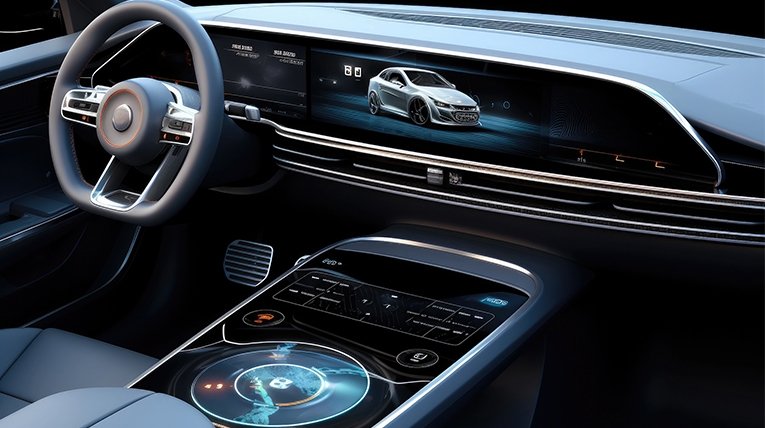
One technology emerging at the center of this transformation is the Cockpit Domain Controller (CDC). By consolidating multiple cockpit functions into a centralized computing platform, CDCs are helping automotive manufacturers simplify vehicle architectures, reduce hardware complexity, and create scalable digital cockpit solutions. More importantly, advancements in semiconductor technologies, software frameworks, and system integration are making CDC platforms increasingly affordable, enabling premium in-vehicle experiences to reach a much broader customer base.
Why Low-Cost CDC Platforms are Becoming Essential for Entry-Level Vehicles
Historically, Cockpit Domain Controllers (CDCs) were primarily deployed in premium and luxury vehicles due to the cost associated with high-performance processors, graphics capabilities, and sophisticated software ecosystems. However, market dynamics have changed significantly. Consumers purchasing compact cars, entry-level SUVs, electric two-wheelers, and affordable electric vehicles now expect connected and intelligent cockpit experiences that rival those found in higher-end vehicles.
At the same time, OEMs face increasing pressure to optimize costs, improve platform scalability, and reduce development complexity. Traditional architectures often require multiple Electronic Control Units (ECUs) to manage infotainment, telematics, digital clusters, connectivity, and various display systems. This approach increases hardware costs, wiring complexity, power consumption, and software integration efforts.
Low-cost CDC platforms address these challenges by consolidating multiple functions into a single hardware platform. Rather than managing numerous independent ECUs, manufacturers can leverage centralized computing architectures that reduce hardware footprint, optimize resource utilization, and lower overall Bill of Materials (BOM) costs. This approach enables OEMs to offer premium digital experiences in high-volume vehicle segments while maintaining affordability and profitability.
Key Trends Shaping the Future of Automotive Infotainment
The evolution of automotive infotainment is being driven by several interconnected trends. Among the most significant trends is the convergence of infotainment, telematics, connectivity, navigation, digital clusters, and camera systems into a unified digital cockpit experience. Modern CDC platforms are increasingly capable of supporting multiple displays and applications through a single computing architecture, delivering seamless user experiences while reducing system complexity.
Another major trend is the rapid adoption of Software-Defined Vehicles. Unlike traditional vehicles where functionality is largely fixed at the time of production, SDVs enable manufacturers to continuously enhance vehicle capabilities through software updates. Features can be added, improved, or personalized throughout the vehicle lifecycle, creating new opportunities for customer engagement and revenue generation. CDCs play a critical role in this transformation by providing the centralized computing infrastructure required to support OTA updates, feature-on-demand services, predictive maintenance, and cloud-connected applications.
Artificial Intelligence is also becoming a key enabler of next-generation cockpit experiences. AI-powered voice assistants, intelligent navigation, driver and occupant monitoring systems, contextual recommendations, and personalized content delivery are rapidly becoming mainstream. As AI adoption increases, OEMs require scalable CDC platforms capable of supporting future software innovation without significant hardware redesigns.
Localization: A Competitive Advantage in Global Vehicle Programs
As automotive manufacturers expand into diverse regional markets, localization is becoming a critical element of digital cockpit development. Consumer preferences, languages, connectivity ecosystems, regulatory requirements, and content expectations vary significantly across geographies. A one-size-fits-all approach is no longer sufficient for delivering compelling in-vehicle experiences.
India presents a strong example of this trend. Consumers increasingly expect regional language support, localized voice assistants, country-specific navigation services, and integration with local digital ecosystems. Similar requirements are emerging across Southeast Asia, the Middle East, Latin America, and Europe. Consequently, OEMs are seeking cockpit platforms that can be rapidly customized for regional markets without requiring extensive redesign efforts.
The ability to efficiently localize user experiences while maintaining a common hardware and software foundation has become a key differentiator for automotive manufacturers. CDC platforms provide the flexibility required to support this localization strategy, enabling faster deployment across multiple regions while controlling engineering costs.
Overcoming the Challenges of Affordable Digital Cockpit Development
Despite the advantages of CDC architectures, developing cost-effective digital cockpit solutions remains a complex undertaking. OEMs must carefully balance performance, user experience, scalability, cybersecurity, functional safety, and long-term software support while operating within strict budget constraints.
This challenge becomes particularly significant in entry-level vehicle programs, where every component directly impacts overall vehicle affordability. Manufacturers must optimize processor selection, memory configurations, graphics performance, operating systems, connectivity technologies, and software architectures without compromising customer expectations. Additionally, evolving cybersecurity regulations and increasing software complexity require robust validation, testing, and lifecycle management strategies.
Successfully navigating these challenges demands deep expertise in automotive electronics, embedded software, system integration, validation, and manufacturing.
How VVDN Helps OEMs and Tier-1 Suppliers Build Cost-Optimized CDC Platforms
With expertise spanning automotive electronics, embedded software, connectivity, telematics, cloud integration, cybersecurity, and validation, VVDN supports customers throughout the entire product lifecycle, from architecture definition and hardware design to software integration, testing, and production. The company’s experience across Android-based infotainment systems, Linux platforms, digital clusters, telematics control units, connectivity solutions, and cloud-enabled applications enables customers to develop CDC platforms that can be deployed across multiple vehicle segments and global markets.
A key differentiator is VVDN’s integrated design-to-manufacturing ecosystem. As many global OEMs continue to expand their engineering and production footprint in India, they require partners capable of supporting both localized development and high-volume manufacturing. VVDN’s in-house capabilities span hardware design, embedded software development, mechanical engineering, validation, testing, and manufacturing, enabling customers to transition seamlessly from concept to production under one roof.
This integrated approach helps reduce development timelines, improve supply chain efficiency, optimize costs, and accelerate product launches. Additionally, VVDN supports regional localization requirements through language integration, market-specific application enablement, connectivity adaptation, and compliance with local regulations. By combining global engineering expertise with localized development and manufacturing capabilities, VVDN enables OEMs and Tier-1 suppliers to build CDC platforms that meet both regional and global market requirements.
The Road Ahead
The future of automotive infotainment will be defined by accessibility rather than exclusivity. Premium digital experiences are no longer confined to luxury vehicles. Consumers across all vehicle segments expect connected, intelligent, and personalized cockpit experiences, creating a need for scalable platforms that can deliver advanced functionality at affordable price points.
Low-cost Cockpit Domain Controllers are emerging as a foundational technology in this transformation. By consolidating computing resources, simplifying vehicle architectures, enabling software-defined functionality, and supporting localization, CDC platforms are helping manufacturers bridge the gap between premium innovation and mass-market affordability.
As the industry continues its transition toward connected and software-defined mobility, OEMs and Tier-1 suppliers that invest in scalable, cost-optimized CDC architectures will be better positioned to deliver differentiated user experiences and accelerate innovation. Through its end-to-end engineering, localization, and manufacturing capabilities, VVDN is helping OEMs and Tier-1 suppliers build the next generation of digital cockpit solutions designed for global markets and future mobility needs.